
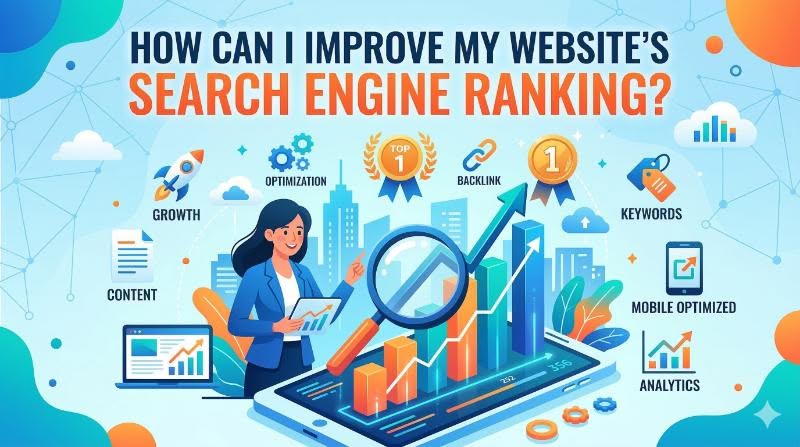
This is one of the most common questions I hear from Brisbane business owners.
Someone launches a website. It looks good. It works on mobile. But when they search for their service on Google… crickets.
Or worse, competitors are showing up everywhere, and your site is nowhere to be seen.
The good news is that most websites don’t need complicated SEO strategies to start improving their rankings. In fact, many small business websites in Brisbane are missing some very basic fundamentals.
After reviewing and auditing many small business websites, I consistently see the same issues appear again and again.
Let’s look at the most common ones.
Quick Answer: How Can I Improve My Website’s Search Engine Ranking?
You can improve your website’s search engine ranking by:
- ensuring your site is indexed by Google
- using relevant keywords on your pages
- improving website speed and mobile usability
- adding clear page titles and descriptions
- building authority through links and reviews
- publishing helpful content that answers customer questions
SEO works best when these elements are combined into a consistent long-term strategy.
Unclear Website Messaging

Before we talk about technical SEO, we need to talk about clarity.
When someone lands on your website, they should be able to answer three questions almost instantly:
- Am I in the right place?
- Can this business help me?
- What should I do next?
If a visitor can’t answer those questions in a few seconds, they hesitate.
They leave.
Google notices that behaviour, and it can hurt your rankings.
Many websites focus heavily on design but forget about clear messaging. A homepage should quickly communicate:
- Who you help
- What problem do you solve?
- What is the next step?
Clear messaging improves user experience, engagement, and ultimately SEO performance.
Missing Metadata and Image Descriptions
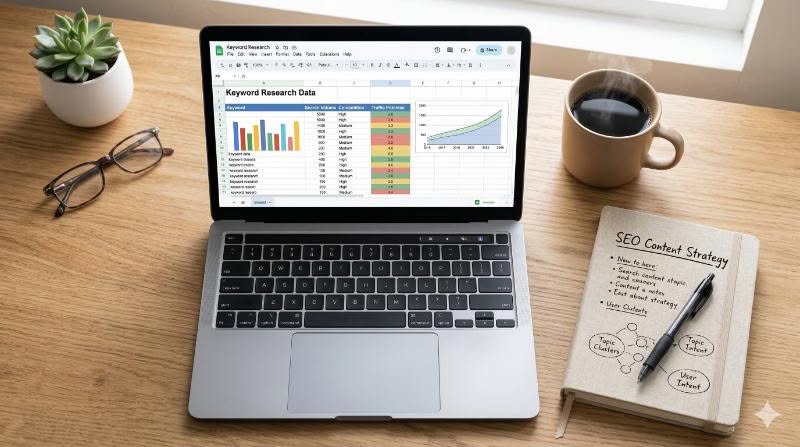
Another issue I see constantly during SEO audits is missing metadata. Don’t get overwhelmed by the techno-jargon. Metadata is quite simple. It’s just extra information that describes specific details about your site.
Metadata includes things like:
- Page title tags
- Page meta descriptions
- Image alt text
Search engines rely on this information to understand what your pages are about.
For example:
A page about landscaping services should have a clear title tag, such as:
“Landscaping Services in Brisbane | Company Name”
But many websites either leave this blank or use generic titles like:
“Home”
The same applies to images. If your website contains photos of your work, but none of them has alt descriptions, you are missing an opportunity to give search engines more context.
These small details can make a significant difference over time.
Weak Authority Signals
We like to do business with people we know, like, and trust, and Google is the same way. If Google trusts you, it’s more likely to recommend your business by showing your site in the search results.
Google wants to recommend trustworthy businesses.
One way it evaluates trust is through authority signals.
These include things like:
- backlinks from other websites
- business listings
- mentions online
- reviews
- consistent business information
But here’s something important many businesses misunderstand.
You do not need thousands of backlinks. A backlink is when another site links back to your site. These can help to build your authority and reputation in your field, but it can be a double-edged sword.
I see businesses chasing large numbers of backlinks by buying cheap links from overseas outsourcers. The problem is that they are of very poor quality and can negatively affect your ranking and reputation.
For most local businesses, a small number of relevant, credible links can be far more valuable than hundreds of low-quality ones.
Quality matters far more than quantity.
Missing Local SEO Signals
If you are a local business, Google needs clear signals that connect your website to a location.
Many websites are missing these entirely.
Common problems include:
- No location pages
- No mention of service areas
- Missing local keywords
- Weak connection to a Google Business Profile
For example, if you are a landscaper in Brisbane but your website never mentions Brisbane, Google has very little information to work with.
Local SEO helps Google understand:
- Where you operate
- Who you serve
- Which searches you should appear for
Without these signals, it becomes much harder to rank for local searches.
Poor Website Speed
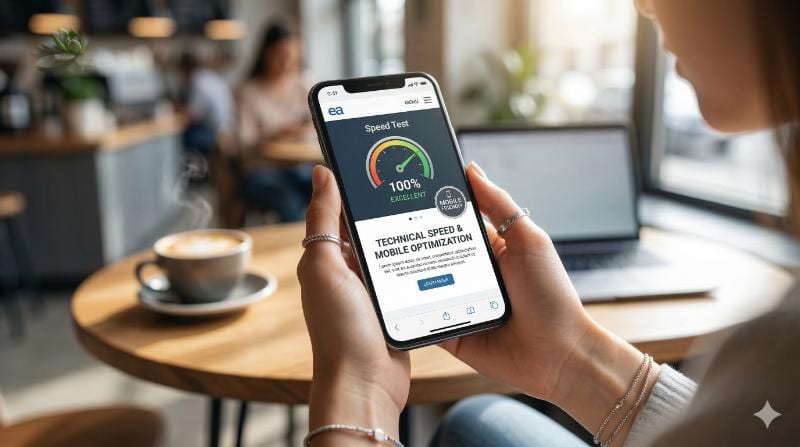
Website speed is a technical SEO factor that is frequently overlooked.
When I review websites, slow load times are extremely common.
This can be caused by things like:
- Oversized images
- Too many plugins
- Poor hosting
- Unoptimised code
A slow website creates two problems.
First, visitors get frustrated and leave.
Second, search engines consider speed when evaluating user experience.
Improving page speed can often provide quick SEO gains while also improving the overall experience for visitors.
What I Check First During an SEO Audit
When I review a website, I usually start with a few key checks.
These help quickly identify major issues that may be holding the site back.
My initial checklist usually includes:
- Whether Google has indexed the website
- Page structure and H1 headings
- Title tags and meta descriptions
- Mobile usability
- Keyword relevance
- Site speed
These basic elements form the foundation of good SEO.
If they are missing or poorly implemented, it becomes much harder for a website to rank well.
Improving Your Rankings Takes Time
SEO is not a one-time task.
It’s an ongoing process that involves improving multiple aspects of your website over time.
The good news is that many websites have significant room for improvement.
Often, fixing the fundamentals can make a noticeable difference.
Want to Know Why Your Website Isn’t Ranking?
If you already have a website but it’s not generating enquiries or showing up in Google search results, it may simply be missing some of these key elements.
I offer SEO audits where I review your website and identify the main issues that may be affecting your search visibility.
From there, we can create a clear plan to improve your rankings over time.
If you’d like to book an SEO audit, get in touch and I’ll take a look at your site.
